
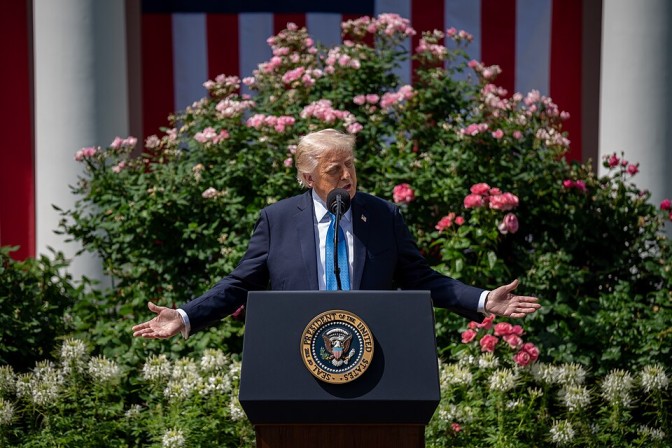
The United States and Iran are engaged in ongoing negotiations aimed at easing tensions, with both sides acknowledging progress despite significant differences remaining. President Donald Trump has fluctuated between issuing military threats and expressing optimism for a diplomatic resolution, contributing to volatility in global markets. However, recent indications that a peace accord might be within reach have helped to lower oil prices and mitigate investor anxiety.
Current talks are reportedly concentrated on drafting a preliminary memorandum of understanding to address immediate concerns, such as reopening the Strait of Hormuz, a key passage for global energy exports. More intricate issues, particularly Iran’s nuclear program, are expected to be reserved for future discussions. A major point of contention is economic relief: Iran wants access to some of its frozen overseas assets before making substantial commitments, whereas the US is inclined to link sanctions relief and financial incentives to demonstrable progress within the agreement’s framework.
Furthermore, disagreements persist over nuclear restrictions. The United States is advocating for more stringent commitments concerning uranium enrichment and nuclear oversight, while Iran favors broader terms that would defer detailed negotiations to later stages. Despite these hurdles, both sides recognize the advancements made thus far, maintaining that a diplomatic solution is still viable.
Analysts suggest that both governments are under mounting pressure to avoid further military escalation and to secure an agreement that could bring stability to the region. As negotiators strive to establish a framework conducive to a more comprehensive future deal, regional security, energy exports, and economic recovery remain at the forefront of their efforts.
