
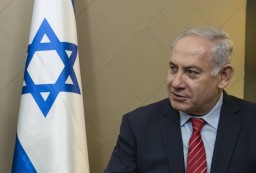
Israeli Prime Minister Benjamin Netanyahu made sweeping claims at Friday’s press conference, asserting that Iran no longer possesses the technical capability to enrich uranium or manufacture nuclear-tipped ballistic missiles after three weeks of intense military operations. He rejected the idea that Israel had pulled the United States into the war, dismissing those claims as misinformation. Netanyahu was optimistic and direct, saying he believed the conflict was closer to its end than most people currently understood.
Netanyahu addressed the US-Israel relationship with characteristic directness. He said he and Trump had achieved a level of coordination unprecedented between two allied leaders and described Trump as the senior figure in their partnership. Netanyahu disclosed that Trump himself had framed the danger of Iran’s nuclear program in their conversations, educating Netanyahu on the risks of underground nuclear capabilities in a way that deepened their shared strategic understanding.
The prime minister confirmed Israel’s unilateral strike on the South Pars gas compound and revealed Trump’s request to hold off on further strikes at Iranian gas assets. He treated this exchange as a healthy function of close allied communication rather than a source of diplomatic friction. Netanyahu maintained throughout that Israel’s freedom to act militarily remained uncompromised.
Netanyahu dismissed Iran’s Hormuz threats as empty blackmail that the international community would not fall for. He proposed overland pipeline routes from the Gulf through the Arabian Peninsula to Israeli and Mediterranean ports, framing the plan as both an immediate solution and a long-term infrastructure investment. Netanyahu argued that removing Hormuz as a chokepoint would permanently blunt Iran’s most powerful geopolitical threat.
Netanyahu’s final remarks highlighted what he saw as a deepening leadership crisis inside Iran. The new supreme leader’s absence from public view during the conflict was telling, he said, and he admitted genuine uncertainty about who was running the country. This leadership vacuum, combined with military defeats, led Netanyahu to believe the war’s end was approaching faster than the outside world expected.
