
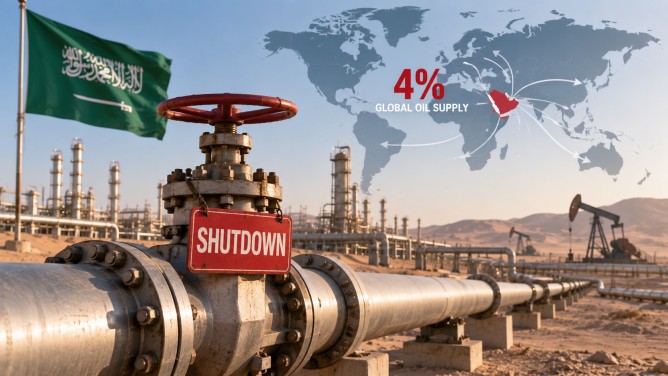
Saudi Arabia’s temporary closure of its key East-West oil pipeline has sparked concerns over global crude supply stability, following an attack that prompted this precautionary measure. The shutdown occurred on September 12, a day after the pipeline was targeted. This 1,200-kilometer pipeline is crucial as it allows Saudi Arabia to transport oil from its eastern production areas to the Red Sea, providing an alternative route when passage through the Strait of Hormuz is compromised.
The growing influence of Iran-backed Houthi forces along Yemen’s Red Sea coast has further aggravated the situation. Their territorial advances near the Bab el-Mandeb Strait, a vital maritime passage linking the Red Sea with the Gulf of Aden, have heightened fears about the safety of oil shipments in the region. This escalation in control by the Houthis poses a significant threat to the security of these crucial shipping lanes.
The significance of the East-West pipeline has increased as Saudi Arabia had escalated exports through its Red Sea facilities due to disruptions in the Strait of Hormuz amid tensions between the United States and Iran. The recent attacks add another layer of difficulty to the kingdom’s efforts to maintain smooth oil flow to international markets. Market analysts have cautioned that an extended pipeline shutdown could significantly impact global oil availability, especially since Brent crude prices have already surged past $100 a barrel against the backdrop of rising Middle Eastern tensions.
If disruptions persist in both the Strait of Hormuz and the Bab el-Mandeb Strait, the consequences could be far-reaching. Such blockages in these critical routes could not only strain global energy supplies but also elevate transportation costs, potentially pushing oil prices even higher. The ripple effects of increased crude prices could lead to higher inflation rates by driving up costs associated with fuel, transportation, and production across major economies, further straining countries dependent on energy imports.
The duration of Saudi Arabia’s pipeline shutdown and the evolving security dynamics around the Red Sea and the Strait of Hormuz will be pivotal in determining the broader impact on global oil supplies and energy markets. As stakeholders closely monitor the situation, the potential for prolonged disruptions remains a pressing concern for global economic stability.
