
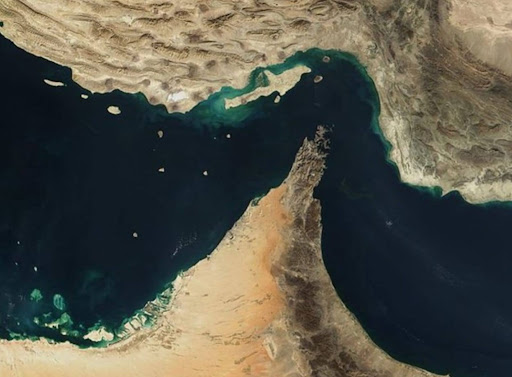
The Strait of Hormuz crisis is forcing policymakers, energy companies, and governments around the world to confront an existential question about the architecture of global energy trade: what happens when the world’s most critical oil shipping chokepoint falls under the control of a hostile state, and no country is willing to reopen it by force? President Trump has called on the UK, France, China, Japan, South Korea, and all oil-importing nations to send warships to the contested waterway, but not a single country has committed forces. The question of what comes next is one that the global energy system appears poorly equipped to answer.
Iran’s blockade of the strait, triggered by US-Israeli airstrikes, has generated the most severe oil supply disruption in history. One-fifth of global oil exports ordinarily flow through the passage. Tehran has attacked sixteen tankers since the conflict began in late February, declared vessels bound for American or allied ports to be legitimate military targets, and raised the possibility of mining the waterway. The combination of these measures has made the strait effectively impassable for commercial shipping and has deterred every potential naval coalition partner from committing forces to reopen it.
The military response has been uniformly cautious. France refused to send ships while fighting continued. The UK explored mine-hunting drones rather than warships. Japan cited a very high deployment threshold. South Korea pledged careful deliberation. Germany questioned the EU’s Aspides mission’s effectiveness. No country has committed forces. The US itself has not deployed naval escorts in the strait. The collective result is an extraordinary strategic vacuum in which the world’s most critical oil shipping lane is controlled by a nation at war with the United States and Israel, while every potential counterweight chooses to wait.
The economic consequences of this vacuum are severe and growing. Oil prices have surged dramatically. Supply chains across Asia and Europe are disrupted. For South Korea, Japan, and China — all heavily dependent on Gulf crude — the crisis represents a genuine national economic emergency. Alternative supply routes exist but are costlier and slower. The long-term implications of a prolonged closure — for energy security planning, infrastructure investment, and the geopolitics of oil — are profound and will be studied and debated for years regardless of how the immediate crisis is resolved.
China’s diplomatic engagement with Tehran offers the most plausible near-term pathway to any improvement. Beijing is reportedly in discussions with Iran about allowing tankers to pass safely, a process that could provide partial relief without requiring military confrontation. The Chinese embassy confirmed China’s commitment to constructive regional communication and de-escalation. US Energy Secretary Chris Wright expressed cautious optimism that China would prove a constructive partner. Whether the outcome of this quiet diplomacy can compensate for the absence of the broader military response that the scale of the crisis arguably demands remains the fundamental unanswered question hanging over the entire Hormuz standoff.
