
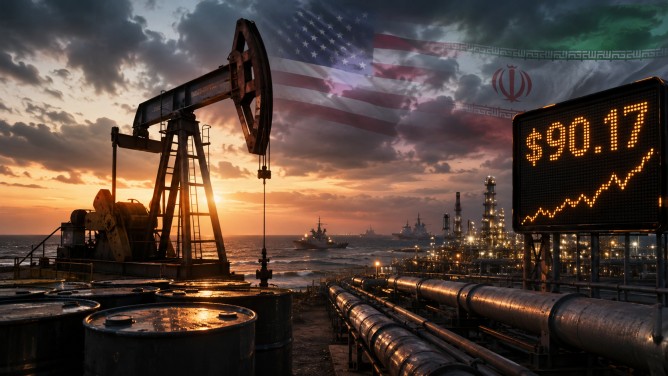
Oil prices have surged significantly as negotiations between the United States and Iran concluded without reaching a peace agreement, heightening concerns about continued conflict and its impact on global energy supplies. Brent crude has climbed above $90 a barrel, settling at approximately $91.63—its highest level since July 30. This price hike follows U.S. President Donald Trump’s insistence that Iran surrender, coupled with a warning of potential escalation if diplomatic efforts prove unsuccessful.
The situation has intensified worries over the Strait of Hormuz, a vital conduit for global oil shipments. A noticeable decline in the number of commercial vessels traversing this critical waterway has exacerbated fears of extended disruptions to oil supplies. The potential for a more aggressive military posture from Iran looms, especially after reports of an attack on a cargo vessel navigating the strait, escalating safety concerns for shipping activities in the region.
Investors are now bracing for what could be a prolonged disruption in oil supplies, as any extended closure or reduced traffic through the Strait of Hormuz is likely to exert additional upward pressure on crude prices. Analysts caution that the ongoing conflict in the Middle East, when combined with the war in Ukraine, may lead to further volatility in global energy markets, potentially driving oil and gas prices even higher.
These developments underscore the precariousness of the current geopolitical landscape, where the intersection of unresolved international conflicts poses a threat to energy stability. Stakeholders across the globe are closely monitoring the situation, aware that any further escalation could have significant repercussions for both markets and consumers worldwide.
